
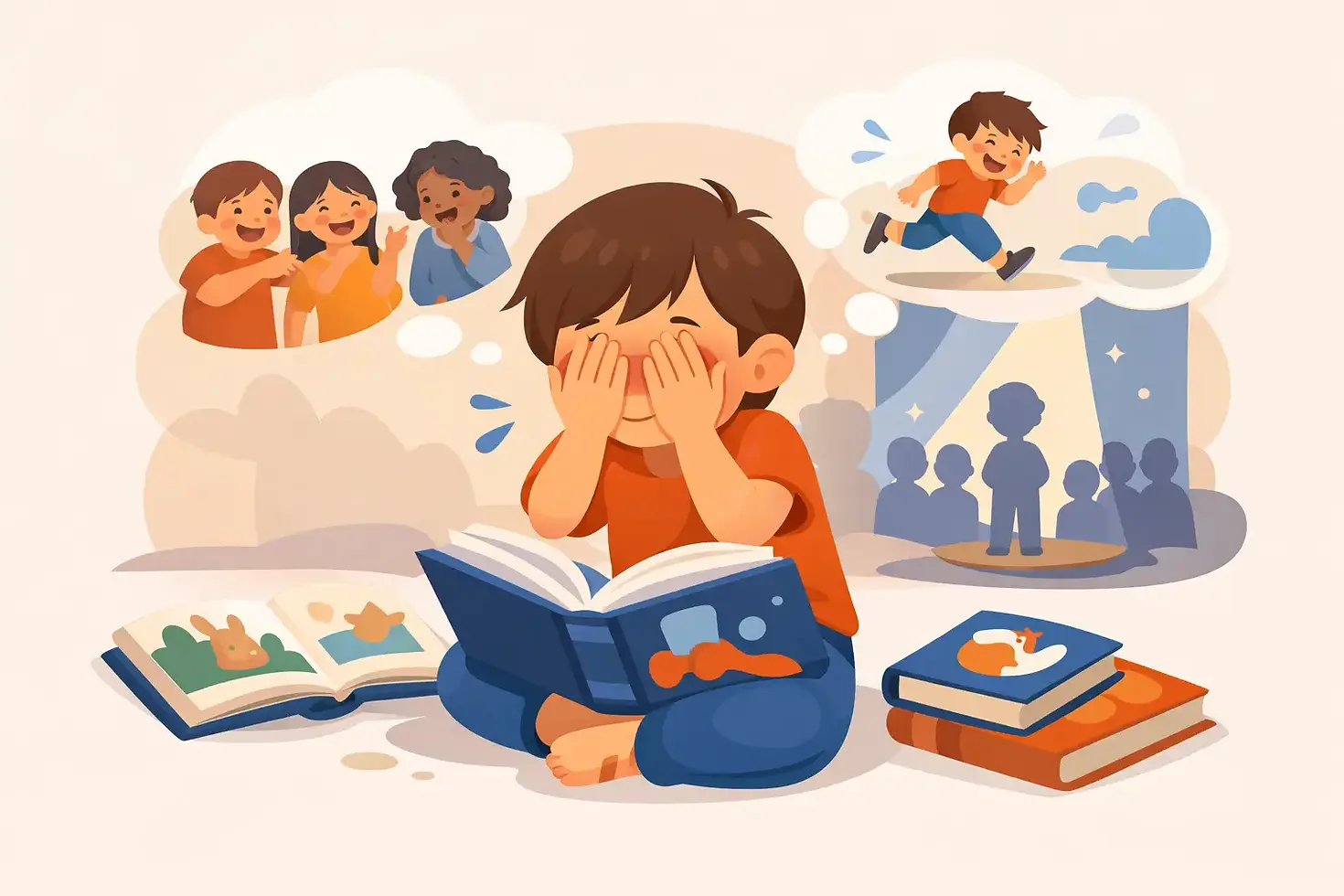
Best Picture Books About Embarrassment
Some childhood moments feel enormous while they are happening. A spilled lunch tray, a misread word during read-aloud time, a silly costume on the wrong day - these are the kinds of memories that can leave a child wanting to disappear. That is exactly why picture books about embarrassment can be so helpful. In the safe space of a story, children get to see that awkward moments happen to everyone, and that those moments do not define who they are.
For parents, grandparents, teachers, and caregivers, embarrassment can be a surprisingly important topic to address early. It sits close to other big feelings children are still learning to manage, including shame, anxiety, frustration, and fear of being laughed at. A thoughtful picture book can soften that emotional load. It gives children language for what they felt, a little distance from the experience, and often a gentle dose of humor that makes the whole thing easier to carry.
Why picture books about embarrassment matter
Embarrassment is one of those emotions adults can underestimate because it may look small from the outside. A child trips in line, says the wrong thing, or realizes they have misunderstood the rules of a game, and the moment passes in a minute or two. Internally, though, it can linger. Some children replay it for days. Others become more cautious, less willing to participate, or more sensitive to attention.
That is why stories about embarrassment are more than comfort reads. They support social and emotional learning in a very practical way. When children watch a character blush, hide, worry, or recover, they begin to understand that embarrassment is a normal human feeling, not a personal failure. They also see what recovery can look like. Sometimes it looks like laughing. Sometimes it looks like apologizing. Sometimes it simply looks like trying again tomorrow.
For classroom use, this topic has special value because school is full of public moments. Children are asked to perform skills, join groups, answer questions, and make mistakes where other people can see. A good read-aloud gives the whole group a shared frame of reference. Instead of discussing one child’s real-life experience, you can talk about the character first. That small shift makes hard conversations feel safer.
What to look for in picture books about embarrassment
Not every book that includes an awkward moment handles the feeling with the same level of care. The best picture books about embarrassment are warm without becoming preachy, funny without making the child the joke, and reassuring without pretending that embarrassment feels pleasant.
A strong story usually does three things well. First, it shows a moment children can recognize. The trigger might be a wardrobe mishap, a misunderstood social cue, a performance gone sideways, or an accident in front of peers. Specificity matters because young children relate best when the scenario feels real and concrete.
Second, it honors the child’s emotional reality. If a character feels deeply embarrassed, the story should allow that feeling to exist. Books that rush too quickly to a lesson can miss the heart of the experience. Children need to feel seen before they are ready to feel reassured.
Third, it offers a believable path forward. That does not always mean a perfect resolution. In fact, the strongest stories often leave room for complexity. Maybe the character still feels shy, but learns they are not alone. Maybe the class responds with kindness. Maybe the character discovers that one awkward moment is only one small part of a much bigger day.
The best kinds of embarrassment stories for young readers
Children experience embarrassment in different ways, so it helps to think about the kind of story that will meet the moment.
Some books lean into humor. These are especially useful for children who can process hard feelings more easily when there is a playful tone. A funny story about a mix-up, a costume problem, or a public blunder can help children release tension and see that awkward moments can shrink with time.
Other books are quieter and more tender. These work well for highly sensitive children who feel embarrassment intensely. Instead of encouraging them to laugh it off right away, these stories offer emotional validation first. They make space for the hot cheeks, the wish to hide, and the worry that everyone noticed.
There are also books that connect embarrassment with growth. These stories often involve trying something new, making a mistake, and learning to keep going. They are especially helpful for perfectionists, hesitant readers, and children who avoid participation because they fear getting it wrong.
If you are choosing for a classroom or homeschool setting, look for stories with discussion potential. The best read-alouds invite children to ask thoughtful questions: What happened? Why did the character feel embarrassed? Has that ever happened to you? What helped in the end? Books with natural openings for conversation tend to stay with children longer because they move beyond the page.
How to use picture books about embarrassment at home or in class
A well-chosen book can do a lot on its own, but the conversation around it matters just as much.
Before reading, it helps to set a calm tone. You do not need to announce a big lesson. In fact, children often respond best when the story is simply offered as a relatable experience. If a child has recently had an embarrassing moment, avoid making the connection too directly at first. Let the story do the gentle work.
During the read-aloud, pause when the character reacts. Ask what they might be feeling in their face, body, or thoughts. Young children often recognize the physical signs of embarrassment before they have the vocabulary for the emotion itself. Red cheeks, a fast heartbeat, looking down, wanting to hide - these details make the feeling easier to identify later in real life.
After reading, keep the discussion open and light. You might ask whether the character wanted help, whether friends or adults responded kindly, or what could make a similar situation easier next time. In a classroom, this can lead naturally into group norms about laughing with kindness, encouraging one another, and giving people room to recover from mistakes.
Extension activities can be especially effective here. Children might draw an “oops” moment that turned out okay, role-play what a supportive friend could say, or create a feelings chart that includes embarrassment alongside more commonly discussed emotions. This is one reason brands like Bellie Button Books build discussion-ready resources around their stories - because the real growth often happens in the moments after the last page is turned.
When embarrassment points to something deeper
It helps to remember that not all embarrassment is the same. For some children, it passes quickly. For others, repeated embarrassment can connect to anxiety, perfectionism, social challenges, or fear of speaking up. A picture book is not meant to solve all of that, but it can be a gentle starting point.
If a child strongly avoids school participation, cries often after small mistakes, or seems stuck in self-consciousness, the right story can open the door to a deeper conversation. You may notice that the child identifies powerfully with a character who feels exposed or misunderstood. That is useful information. It tells you where reassurance, practice, and support may be needed.
There is a trade-off to consider here. Some books reassure children by showing that no one noticed the embarrassing moment. Others are stronger because they admit that people did notice, and the child still got through it. Which approach works better depends on the child. Some need immediate comfort. Others benefit more from learning that being seen during a mistake is survivable.
Choosing stories children will return to
The most valuable picture books about embarrassment are the ones children ask to hear again. Repetition matters because emotional skills are built over time, not in a single reading. A familiar story gives children the chance to revisit a hard feeling when they are ready, often with a little more confidence each time.
When choosing books, trust warmth, relatability, and reread appeal. Look for expressive illustrations, child-centered pacing, and stories that balance heart with hope. If a book invites giggles while still treating the character kindly, that is often a very good sign. If it sparks a conversation without forcing one, even better.
Children do not need stories where everything goes perfectly. They need stories where something awkward happens and life keeps going. They need reminders that mistakes can be repaired, attention can fade, and one embarrassing moment does not erase their courage, creativity, or place in the group.
Sometimes the kindest thing a book can say to a child is this: yes, that felt awful - and you are still okay.


Comments